Joomla Hosting BLOG

Blog about Joomla, Technologies and Hosting Service

ASPHostPortal :: How To Setting SMTP for Joomla

clock December 18, 2014 08:47 by author ben

SMTP settings for Joomla

Configuring an SMTP server for Joomla and start sending out emails is extremely easy. You just need to enter the right SMTP settings and your outgoing server will be configured.
Remember however that if you use a normal SMTP server on Joomla – like the ones associated to Gmail or Hotmail – you will be always exposed to deliverability issues, especially if you're sending mass emails. Only a professional SMTP service will guarantee a full delivery rate, so if you plan to set up a newsletter campaign you should consider this option seriously.

Now here's how to configure an SMTP server on Joomla:

1. Enter your Joomla dashboard.
2. Click on "Site", "Global configuration".
3. Choose the server "Server" tab and find the "Mail settings" section:

4. Fill the fields with the following information:

•    Mailer: SMTP Server
•    Mail from: your email account (the one from which you want to send emails)
•    From Name: your name or company name
•    Sendmail Path: /usr/bin/sendmail
•    SMTP Authentication: select Yes if you want to send it authenticated, No if you don't
•    SMTP Security: select the type of security (SSL or none)
•    SMTP Port: 25 or 465 (if you want to know more check our article about SMTP ports)
•    SMTP Username: your email address on the server's domain
•    SMTP Password: your password
•    SMTP Host: your SMTP hostname. If you don't know it, have a look at our handy list of the major SMTP host settings

That's it, you're done.


Joomla Hosting - ASPHostPortal.com :: Suggestions To Get A Much Better Joomla Website Performance

clock December 17, 2014 06:35 by author ben

JoomlaHosting.ASPHostPortal.com - Within the connected globe, it’s the undeniable reality that speed plays a part of value inside the success of one's site. No one accepts low speed. When you have a site with poor overall performance, the prospective clients will leave you, even the search engine will leave you, as well as your online company is doomed! That is why improving your website speed should become a single from the very first priorities. In case your website is Joomla-based, then it is lucky for you personally that it’s not that tough to boost the efficiency. There’re some optimizations you are able to do, which will be introduced within this post as the suggestions, to make your web site load in less than a second!


Just before we commence, the very first thing you have to do is to verify how fast currently your site is. There’re some free of charge online tools obtainable that can assist you to determine these parameters:

  • Google Pagespeed Insights
  • Webpagetest
  • GT Metrix


Now once you have the result, let’s begin carrying out some optimizations. Bear in mind to backup your database before carrying out every important step.

1. Pick a good host

It’s obvious that choosing the proper host for the web site is vital. You ought to not waste funds on incredibly premium hosting service pack with sophisticated functions that your website will hardly ever use, but on the other hands, you need to also not pay your funds for low top quality ones. A poor host will spoil your efforts, producing your web site slow, regardless of how well-optimized your website is. Remember to verify the critiques from the neighborhood just before producing decision. The best way is selecting a service package from a highly-rated hosting provider.


2. G-Zip: compress to improve site overall performance

Picture that all of your pages will be compressed inside a zip file, getting sent to the browser on your Pc or mobile and unpacked there. It's going to save you a lot of bandwidth. That’s exactly what G-Zip will do if it is turned on. To enable this function, in Admin Panel, go to Worldwide Configuration/Server and turn on G-zip


Except for the ancient versions of Internet Explorer, G-Zip is supported by all present popular browsers, which includes Chrome, Safari, Firefox, IE7+, and Opera. It is absolutely safe to turn on.

In case you discover that it didn’t work, it’s very possible that your host will not assistance mod_gzip from Joomla, or has it switched off.

3. Eliminate unnecessary extensions

Regardless of the truth that extensions is among the greatest strengths in the Joomla atmosphere, you should take a careful consideration when choosing which extension to install. Some extensions can seriously slow down your web site performance. Some main problems makers may be listed as below:

  • Large image sliders. Large images, especially full-width ones, frequently take a lot of time for you to be load. It's going to reduced the entire web site performance also as user encounter.
  • Social media scripts, which includes the counters for the amount of like or tweet. They need extra javascript, and continuously connect the remote network, which can terribly slow down your complete website. Nonetheless, within the social era, these social scripts have become “must-have” for any site, so what you can do is always to allow theme only on certain web page. As an example, you'll be able to load-off them to only get in touch with page, or “about us” web page. Only those web page will probably be affected.
  • Some scripts like Google Analytics, or Google Webfonts.


4. Reduce the image size

Amongst all the website’s sorts of contents, images usually tends to make up from the largest proportion of storage. That is why they have to be optimized in order to increase the website’s speed. There’re two items you need to contemplate when you have intention to make use of photos in your web site.

Firstly, bear in mind to utilize image with right sizes. Clearly, in case your image is big, it will take a lot of time to be loaded.

Secondly, you are able to often reduce the size in the pictures drastically making use of accessible tools with some easy steps. Listed below are some tools that might help:

  • Photoshop (obviously). You'll be able to save the image by using “Save for web and devices”
  • TinyPNG
  • Smush


That is all for the first part about tricks to boost your Joomla web site efficiency. We hope you discover it useful as you can effortlessly apply all these tips to your personal web site right following reading this post. Do not forget to verify our web site frequently as the other excellent posts about Joomla ideas and tricks will probably be released soon.


Joomla 3.4 Hosting - ASPHostPortal.com :: How You Can Set up Joomla SEF (Search Engine Friendly) URLs in Easy Steps

clock December 10, 2014 06:11 by author ben

With the ability to set up Joomla SEF (Search Engine Friendly) URLs is among the most beneficial ways to boost your Joomla Seo at the same time to acquire enhanced specific website visitors for your site. That will help you are doing just that, here is a 5-step blueprint for location up Joomla SEF URLs simply and swiftly (in 5 minutes or significantly less, which is!).

Configure.htaccess: Go to your Joomla website hosting account’s ‘Control Panel’ spot and login. Once you will be in, find and click on to the “File Manager” (from where you can access, modify and add your website’s data files). There should be a ‘htaccess.txt’ file in there. Rename the file to ‘.htaccess’ (without the quotes). Was not that simple?

Login for your Joomla Admin Location: Visit the ‘/administrator’ directory of one's Joomla set up and login. This is when you may be executing the actual setup on the Joomla SEF URLs.

2 actions down, 3 a lot more to go!:)

Global Configurations: When you happen to be logged in into the admin space, locate and click on to the “Global Configurations” website link. This is where a few of the primary options and options for your personal Joomla Search engine marketing is usually configured. But for now, let's just concentrate on encouraging you to setup Joomla SEF URLS. So, just click on over the “Site” tab. Really don't tamper with thepress();

Search engine optimization Options: There’s an “SEO Settings” portion listed here that you ought to see. Now, go on and check out ‘yes’ for equally the “Search Motor Pleasant URLS” and “Use Apache mod-write” solutions.

There is a ‘Save’ button within the major of the webpage. Simply click on it to avoid wasting your options.

And, voila! You might be finished!:) You might have just setup Joomla SEF (search engine helpful) URLS for your personal web site. Although this can be a huge move to optimizing your internet site, you can find other Joomla Web optimization recommendations and methods that you should also explore for highest influence plus more targeted site visitors.

While you'll find other ways to go ahead and setup Joomla internet search engine pleasant URLs in your web site, this 5-step procedure is about the easiest and fastest way to get it done.

Now, wasn’t that speedy and straightforward?


Joomla 3.4 Hosting - ASPHostPortal.com :: How To Install tems using the tmp folder in Joomla 3.4

clock December 4, 2014 05:51 by author ben

How to install items using the tmp folder in Joomla 3.4

A question that frequently crops up on our ticket and forum systems is “why won't the T3 plug-in install correctly via the joomla installer?” - this problem is frequently due to the hosting file upload limit being set too low. One solution is to upload an extension via the tmp folder. This tutorial looks at how you can utilise this method to install Joomla extensions.

The Uploading Process

  • Download the extension archive to the hard drive. The T3 plug-in is being used in this example.
  • Extract the archive into a folder – in this case the Zip file has been extracted to a folder called t3.
  • Using FTP upload the folder and its contents to the tmp folder, which is found in the root of the Joomla site as shown here.

Joomla Admin

  • Navigate to the Joomla installer via extensions > Extension Manager.
  • Click the text “Install from Directory” in the second tab.
  • In the “install Directory” input box type the folder name - in this example I have typed t3.
  • Hit install.
  • Extension should now successfully install.

Alternative Solution

An alternative is to increase the hosting account upload limit (although this may not be possible with some hosts).


Joomla 3.4 Hosting - ASPHostPortal :: Greatest Joomla Remarks Extensions And Why You Ought to Use One

clock December 3, 2014 06:05 by author ben

Wordpress was developed strictly as being a website system, around the other hand, Joomla from its starting was an entire feature CMS. These are the key factors to the differences between these two material administration methods. WordPress comes outfitted with a number of functions constructed into Core, a single of these is remark system. Although Joomla 3.4 never have in-build feedback, and probably even in long term version 3.5 will don't get it, you've possibility to put in & use them in a simple and fast way. And probably you have even more possibilities how they should work for you.


Advantages of Comments

Feedback can be used for different ways, like a standard comment for articles (all or selected), for reviews of products and much more. It is up to you how to use this function in your web project. But the most important reason for their use remains unchanged, users (registered or not) it is a great way of developing unique on-page content sometimes even each day as well as allowing visitors to share their insights. The content material which is also indexed by Google and can help your SEO. If users can read independent reviews of an individual article, offer or service, they see how real users perceive products, not only the manufacturer or reseller description.

In particular, also if you going to run a small business weblog section based on Joomla!, 1 of the most important areas is the remark section. Interaction and audience participation plays a big role in the success of your website, with direct remarks as well as social media sharing.
Two solutions but many extensions

In general we have two principal feedback storage solutions: as a content material in your CMS or as a social commenting system (Disqus, Facebook Remarks, Google Plus feedback) but in second option - those feedback do not belongs to you database, because they are hosted on their "social" platforms.

When we are talking about Joomla and you will check number of extensions on JED for feedback you might lost. What to choose and what will be good for me.

K2 - this is not a simple comments method, it can be even called additional material management inside Joomla because it has so many attributes, options etc. When you are using K2 you never have to worry about feedback because it have in-build such a system. There are also solutions which allows you to replace this system with other.

JComments - it's very popular and known since 2009 AJAX based remark program (extension) for Joomla. If you used it on Joomla 1.5 you will still love it because there is a edition for both Joomla 2.5 and Joomla 3.4. It has flexible ACL, smiles, BBCodes and avatars support, Antispam (CAPTCHA) and flood protection, Ban Ip, Quick moderation (from e-mails) and much more functions. On project website you can find also modules which allows you to show latest remarks, latest commented or most commented articles. Greatest advantage, it is still a free component, but it inserts a backlink to the developer, this might be not good for you in some cases.


Komento - without a doubt features a shorter historical past than JComments, simply because initial version was published in Might 2012, but crew powering this answer is powerful and completed a great job. Maybe which is why Komento was a single of the winners in the Community Choice Extensions inside the JED in December 2012 as a result of its effective and beneficial attributes. It utilizes the very best confirmed options from remarks sytems, furthermore, updates happen really regularly. It handles comments in K2, EasySocial, JomSocial, FlexiContent, ZOO, EasyBlog, VirtueMart, AceShop, redSHOP, Ohanah , Sobi Pro , Mosets Tree in Skilled model. When you can examine it's two edition free of charge and industrial.


Joomla 3.4 Hosting :: ASPHostPortal.com - How to Secure Joomla and Protect it Against Hacker Attacks

clock November 27, 2014 05:41 by author ben

How to Secure Joomla and Protect it Against Hacker Attacks

As any open source application Joomla is subjected to all sorts of hacking attacks. This is why it is important to take all possible measures to protect your Joomla site and improve its security. Follow the instructions in this tutorial in order to minimize the chance to get hacked.

Step 1 Keep Joomla and its extensions up-to-date

Probably the most important part of securing your Joomla website is to keep it updated to the latest version. In almost all version releases there are fixes for security issues. For more information on how to update Joomla to the latest version.
Keeping your Joomla extensions up-to-date is equally important for the security of your website. Actually, there are more attacks that utilize security issues in extensions than in the actual Joomla core files. For more information on how to keep your Joomla components, modules and plugins up-to-date

Step 2 Use Strong Login Details

First, you should avoid using default user names like "admin" or "administrator". Those will be first in the list of words a potential attacker would try.
Next, it is important to have a strong password for your website. Many attackers try to brute-force your login details. This means that they use a list of commonly used passwords to guess yours. There are several tips that will help protect you against such attacks:

  • Don't use common words for passwords like love, god, pass, admin, admin123, etc.
  • Avoid personal information in passwords like your personal or family name.
  • Avoid password generators. Password generators use algorithms to generate the passwords which can be compromised by an attacker.
  • Use as many special characters ( *!@#)$ ), numbers and capital letters in your password as possible.

Step 3 Use Proper File Permissions & Ownership

Another important part of having a secured Joomla website is to set the right permissions for your Joomla files and folders. We recommend that you follow these suggestions for your permissions:

  • Set the permissions for your Joomla folders to 755
  • Set the permissions for your Joomla files to 644
  • Set the permissions for your configuration.php file to 444
  • Never use 777(full access) permissions!

For more information on how to change your files and folders permissions, please refer to our File Permissions Tutorial.

Step 4 Use Joomla Security Extensions

Using security extensions is another easy way to improve your Joomla website security. We have developed our own security extension (jHackGuard) that is free for download by anyone. Below you will find a list of the most popular Joomla security extensions:

  • jHackGuard
  • Akeeba Admin Tools
  • jomDefender
  • jSecure

Step 5 Often Backup your Joomla Site

It is essential to backup your Joomla site as often as possible. You should always keep a backup copy of your Joomla files and database on your local computer just in case something happens. For more information on the best Joomla backup practices.

Step 6 Protect Your Administrative Page

You can greatly improve the security of your Joomla website if you restrict the access to your admin area. First, you can password protect the /administrator folder of your site. To do this, follow the instructions in our tutorial on How to Password Protect Folders. Once you protect your /administrator folder an additional password will be required in order to see the standard administrator login form.

Next, you can restrict the access to the /administrator directory only to your IP address. If there isn't a file named ".htaccess" in the /administrator directory, create one and upload it via FTP for example, otherwise, just add the following lines at the end of the .htaccess file:

Deny from ALL
Allow from x.x.x.x

"Note that you need to replace x.x.x.x with your actual public IP address. To find out your address, you can use the What Is My IP website for example. To add multiple IPs, simply replicate the Allow from x.x.x.x command to a new line and change the address".

Important If your Internet service provider is giving you a dynamic IP address, the IP restriction option might not be suitable for you because you'll have to edit the .htaccess file each time your IP changes.


Joomla 3.4 Hosting - ASPHostPortal :: How to Fix Joomla Update Error

clock November 26, 2014 06:03 by author ben

Simple Trick to Fix Joomla Update Error

For some case, after you update your Joomla to the Joomla 3.4 version you may get an error like 0 SQL=SHOW FULL COLUMNS FROM `pos_postinstall_messages` while navigating to the System > Control Panel. This error happened because the database is not updated in sync with the platform update. This is what you should do to update the ‘database’ and fix the error:

Steps to Fix Joomla Update Error

Step 1. Click on Extensions > Extension Manager

Step 2. In the following page > Click on Database on the left > and then Click Fix in the top-left of the page.
Step 3.
You should now see a message > Database table structure updated.
Finish. The error should now be resolved.

That is so easy trick right?


Joomla 3.4 Hosting :: ASPHostPortal.com - How to find JavaScript conflict in Joomla

clock November 20, 2014 05:39 by author ben

How to find JavaScript conflict in Joomla?
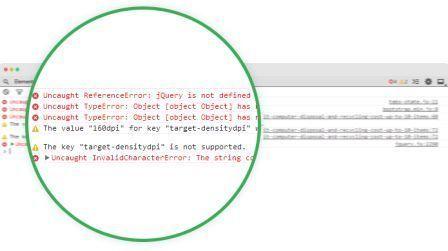
While JavaScript are beautiful and very handy, they can also bring down a site if in conflict with each other. One can expect JavaScript conflicts to appear as more and more extensions are installed in a Joomla site. The extensions may be using different JavaScript libraries or different library versions or libraries made by different developers which can be in conflict to each other.
It is not all that difficult to rule out such conflicts and extension / template developers can be asked for help then on.

What causes JavaScript conflicts?

The different versions of Mootools library and jQuery library can make a lot of JavaScript conflicts. Event when you use the same libraries versions but those libraries made by different developers (i.e jQuery and Mootools conflict), JavaScript conflict can also occur.
Here is a case study:

  • Template A loads Mootools library version 1.5.0
  • Plugin B loads own Mootools library version 1.2.6
  • Module C loads jQuery library version 1.11
  • Component D loads jQuery library version 2.1.1

An other cause of JavaScript conflict is browser, some non-standard browsers handle JavaScript and the browser's JavaScript conflicts with JavaScript loaded from your site.

How to detect JavaScript conflicts?

So when your site is not working as expected, one should rule out conflicts. But how to check and find the JavaScript conflict?

"The ANSWER is checking the JavaScript console".

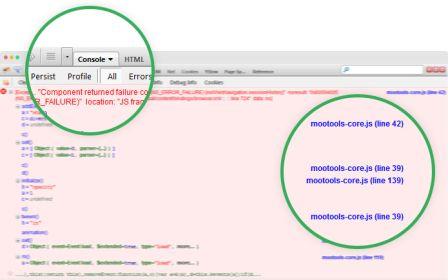
There are multiple ways to do it based on browsers. For example, in Firefox and Chrome, the available tools are Firebug, Web Developer toolbar, Debugger, Error Console, etc.
If your site has JavaScript error, the tools will provide you error messages that will help you to figure out the problem and zero in on the extension / feature of website causing this problem. The error message also gets you the names of file in conflicts.
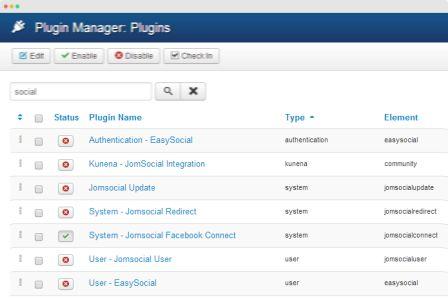
You can detect the problem by checking which extensions cause the problem, here are the steps:

  • Switching to default Joomla template and disable your installed extensions then reload your site and check if the JavaScript error still exist or not.
  • Publish your installed extensions one by one and reload your site. Repeat the process until you discover which parts are in conflict.
How to resolve JavaScript conflicts?

There is no universal step to resolve JavaScript conflict as it varies from case to case and are best resolved by the developers. But here are few things that you can try:

  • Put jQuerry into no-conflict mode

The jQuery library and all of its plugins are contained within the jQuery namespace. Global objects are stored inside the jQuery namespace, by the way so you shouldn't get a clash between jQuery and any other library such as prototype.js, MooTools.

  • Putting jQuery in no-conflict mode immediately after it is loaded onto the page and before you attempt to use jQuery in the page.

<!-- Another way to put jQuery into no-conflict mode. -->
<script src="/prototype.js"></script>
<script src="/jquery.js"></script>
<script>
jQuery.noConflict();
jQuery( document ).ready(function( $ ) {
    // You can use the locally-scoped $ in here as an alias to jQuery.
    $( "div" ).hide();
});
// The $ variable in the global scope has the prototype.js meaning.
window.onload = function(){
    var mainDiv = $( "main" );
}
</script>

Ask for help from extension provider

If you can not resolve the JavaScript conflict by yourselves, you can search for solutions on internet, ask on forums or ask for support of the extension provider for solution.

My site has different issues?

JavaScript conflict is just one error type, errors can also be produced by PHP, SQL, etc. You can detect those errors using Joomla error reporting, follow THIS LINK for more details.


Joomla 3.4 Hosting - ASPHostPortal :: How to use SSL in a Joomla site ?

clock November 19, 2014 08:05 by author ben

Introduction

Joomla Force SSL is a Joomla feature to activate the SSL Certificate on your Joomla website. SSL stands for Secure Sockets Layer, it is a security protocol that transmits private information over your Joomla site to the scrambled format. As needs be, connections with/inside your site will be on the protected https protocol rather than the standard http prefix.

Your site really needs SSL Certificate?

if you have an ecommerce or business site, SSL Certificate is about a must to ensure your important information is protected. See this Knowledge section for the definite examination.

How to set up SSL in your Joomla site?

Let’s consider if SSL Certificate is necessary for your site.

1. Checklist for your set up

To get SSL Certificate enabled for your Joomla site, you should have these followings in advance :

  • SSL Certificate, which has been installed successfully on your server.
  • Your dedicated IP Address, which is unique for one SSL Certificate.

2. Enable Force SSL in your Joomla site

Note: we used Joomla 3 in this tutorial, for Joomla 2.5, it’s the same.

Step 1: configure your configuration.php file

> Open your configuration.php file
> Find the following line:
var $live_site ='';
> Replace with:
var $live_site = 'https://www.your-domain.com';
> Next, open .htaccess file then add the following code to the bottom of the file.
RewriteEngine On
RewriteCond %{HTTPS} OFF
RewriteRule (.*) https://%{HTTP_HOST}%{REQUEST_URI}

Step 2: enable Force SSL in your Joomla site

> In the Admin Panel, navigate through System >> Global Configuration or simply click the Global Configuration button.

> Within the Server tab, in the Server Settings section, there are 3 Force SSL alternatives that you can select, namely:

  • None: SSL will not be enabled in your Joomla site.
  • Administrator Only: connections to your administrator will be on HTTPS.
  • Entire Site: connections all over your website will be on HTTPS.

> Hit the Apply/Save button. You are done now! So let's check your site now.

Tips: 

In the event that you need to enable Force SSL in some particular pages of your Joomla site. This alternative is really not available in Joomla back-end settings. More over, there are different Joomla extensions permitting you to redirect your chose pages into HTTPS. SSL Redirect could be an extraordinary pick, this extension is good with both Joomla 2.5 and Joomla 3.


Joomla 3.4 Hosting - ASPHostPortal :: How to Develop OnePage Layout Utilizing SP Page Builder

clock November 5, 2014 05:02 by author ben

Graphic design is ubiquitous in contemporary websites. The one-page structure nevertheless is among the popular web design developments. Those kind designs are frequently challenging to create, they ask for unique template format with lots of module positions in rows, and designers need to plainly express details whilst also gratifying aesthetic targets. The key notion in the One-Page format is predicated on this concept: hyperlinks really don't open up a fresh page; rather, each time a person clicks around the sub-menu hyperlinks the display jump down the web page to that exact content’s area. These designs are challenging as they are less structured and also have a broader variety of dimensions and element ratios. Aesthetics can also be important, as patterns need to usually be eye-catching and visually pleasing.

Many templates also custom-made can be utilized as One Webpage structure, not only those which have been created expressly for this goal. In general what might be surprising for you never even need any module position expect perhaps leading menu, all new positions you'll be able to produce utilizing only SP Page Builder and every Joomla! subpage can use different layout. In means that you'll be able to even use Protostar (default Joomla 3.4+ template) to produce beautiful and expanded layout. This Joomla! extension designed for you to definitely enable you to create your own personal a single subpage masterpiece with several modern trendy functions in-build. 1 of these is an smart responsive style that adjustments it's screen dependent on the dimension from the display your visitor is viewing your site with. What this means is that you simply only need a single design to operate within the multitude of devices: tablets, telephones, laptops and desktop screens that your customer could be viewing your site with.

  • Very first phase is nearly this exact same, you've got to put in SP Page Builder component (Basic or Professional version).
  • Inside of PB component click "New" button to make a brand new webpage check out. Input title, for instance "onepage". Now as an example you can set up template structure called "Full Width Layout" which can present you ways it works.


    While building PB we kept in mind User Experience and customizability. As a result it is easy to navigate and to customize appearance of used elements.
  • Every row has beneath "gear" icon settings also there you will find "Section ID" area - in which you can established the ID attribute for your specific factor. An ID ought to be distinctive in a webpage if you would like utilize it later on for OnePage functions. Knowing this you'll be able to very easily incorporate new rows with picked addons and use distinctive ID title for every of them, for instance: company-features, our-services, our-clients, address-map.

    A lot more usually, style needs creating many options, including colors, fonts, and pictures; we go away picking these variables to long term work.


    After it will allows you to use #company-features menu links in Menu Manager for your sub-menu module. Right now focus on adding different add-ons to your layout with real content if you have it.

  • Save new page layout, and go to Menu Manager -> New Menu Item -> Menu Item Type -> SP Page Builder -> Page and choose your created before layout, in my case it was "one-page".


    It means that under this menu item you will have page which you created in SP Page Builder few moments ago.
  • Now using # before ID name you can add menu lub sub-menu links. Don't forget that they are only local links in single page view.

Bear in mind, our element provides only basic designs - therefore if you will need a lot more polished and beautiful last end result you've got to make use of your own personal css designs and class'es in rows.

The single webpage web design can be a great solution for presenting certain product (new mobile application) or services (repair laptops, car, motorbikes and so on.). You should use it as being a multi page website or benefit from the 1 web page framework - all around you.


About ASPHostPortal.com

We’re a company that works differently to most. Value is what we output and help our customers achieve, not how much money we put in the bank. It’s not because we are altruistic. It’s based on an even simpler principle. "Do good things, and good things will come to you".

Success for us is something that is continually experienced, not something that is reached. For us it is all about the experience – more than the journey. Life is a continual experience. We see the Internet as being an incredible amplifier to the experience of life for all of us. It can help humanity come together to explode in knowledge exploration and discussion. It is continual enlightenment of new ideas, experiences, and passions

 photo ahp banner aspnet-01_zps87l92lcl.png

Corporate Address (Location)

ASPHostPortal
170 W 56th Street, Suite 121
New York, NY 10019
United States

Sign in