Joomla Hosting BLOG

Blog about Joomla, Technologies and Hosting Service

Press Release - ASPHostPortal.com Proudly Launches osCommerce 3.0.2 Hosting

clock January 30, 2014 10:13 by author Mike

ASPHostPortal.com is a premiere web hosting company that specializes in Windows and ASP.NET-based hosting with innovative technology  solutions, proudly announced the best osCommerce 3.0.2 hosting service with a combination of affordable price, high customer  satisfaction rate and commendable quality in all ASP.NET and Windows web hosting plans.

osCommerce 3.0.2 are made to showcase the new features being worked on and to generalize a version specific for testing to help fix  and improve subsequent alpha releases for a final, stable, secure, and production ready 3.0.2 releases. The osCommerce solution offers  great flexibility and empowers even amateur webmasters to develop highly competitive ecommerce websites.

Until recently, the cost involved in hiring a web development company to develop a similar ecommerce web site was prohibiting several  small businesses from selling on-line. The osCommerce solution is one of the best fruits of the open source community and which poses  a serious challenge to other similar commercial software products.


Installation for this software can be performed easily from within the web hosting control panel, even by customers with poor  programming experience. The installation process takes up to a minute to perform, thus enabling customers to deploy an entire  ecommerce storefront for their business within a few clicks of the mouse.

ASPHostPortal.com
is the among the few top web hosting company that tested and offer ASP.NET hosting plan that compliance with  osCommerce 3.0.2 hosting. There are several companies out there that offer e-Commerce hosting plan but at ASPHostPortal.com, we provide quality e-Commerce  hosting plan at affordable prices that will not only keep your operating costs low but also help you to maximize your profits.

ASPHostPortal.com
development teams have fully tested and deployed the latest osCommerce 3.0.2 in hosting control panel systems.  Clients can install and use osCommerce 3.0.2 hosting with few clicks of installation steps. For more information about this topics or  have any enquiries related to osCommerce hosting, please visit http://www.asphostportal.com/osCommerce-Hosting.

About the Company
ASPHostPortal.com is a hosting company that best support in Windows and ASP.NET-based hosting. Services include shared hosting,  reseller hosting, and sharepoint hosting, with specialty in ASP.NET, SQL Server, and architecting highly scalable solutions. As a  leading small to mid-sized business web hosting provider, ASPHostPortal.com strive to offer the most technologically advanced hosting  solutions available to all customers across the world. Security, reliability, and performance are at the core of hosting operations to  ensure each site and/or application hosted is highly secured and performs at optimum level.


ASPHostPortal.com Proudly Launches nopCommerce 3.2 Hosting

clock January 23, 2014 10:46 by author Mike

ASPHostPortal.com is a premiere web hosting company that specializes in Windows and ASP.NET-based hosting with innovative technology  solutions, proudly announced the best nopCommerce 3.2 hosting service with a combination of affordable price, high customer  satisfaction rate and commendable quality.

nopCommerce is an open source e-commerce solution that contains both a catalog frontend and an administration tool backend.  nopCommerce is a fully customizable shopping cart. It's stable and highly usable. From downloads to documentation, nopCommerce.com  offers a comprehensive base of information, resources, and support to the nopCommerce community. The latest version of nopCommerce is  3.2 with lots of awesome features.

The first feature that will grab the attention of every nopCommerce store owner is the new Facebook Shop. The next major functionality  that comes with nopCommerce 3.20 is its support for warehouses. What this means is that you can configure individual products to be  shipped from a specific location (warehouse). You can also configure the system to use the warehouse location when calculating the  shipping cost for the product. While we are on the nopCommerce 3.20 shipping functionality, there is another new feature worth  mentioning. Now the store owner can specify when a product will be shipped. In nopCommerce this information is referred to as delivery  date. This is useful for example when you are selling products, which are manufactured on demand.

Nopcommerce 3.2 is simply the best and most powerful open source shopping cart on the planet. It is the only open source shopping  cart application that supports both multi-sites and multi-vendors. NopCommerce is fast, easy, and fun. I definitely recommend  NopCommerce to anyone who wants to start an online business.


ASPHostPortal.com
is a popular online nopCommerce 3.2 hosting service provider with all of its hosting plans to help users to automate  and simplify website and server administration tasks such as installation and migration. There are several companies out there that offer e-Commerce hosting plan but at ASPHostPortal.com provide quality e-Commerce  hosting plan at affordable prices that will not only keep your operating costs low but also help you to maximize your profits.

nopCommerce is ASP.NET 4.0 based supporting MS SQL databases. It features an embedded graphic installer, so nopCommerce can be setup  in few minutes and run immediately. For more information about this topics or have any enquiries related to nopCommerce hosting,  please visit http://www.asphostportal.com/nopCommerce-Hosting.

About the Company
ASPHostPortal.com is a hosting company that best support in Windows and ASP.NET-based hosting. Services include shared hosting,  reseller hosting, and sharepoint hosting, with specialty in ASP.NET, SQL Server, and architecting highly scalable solutions. As a  leading small to mid-sized business web hosting provider, ASPHostPortal.com strive to offer the most technologically advanced hosting  solutions available to all customers across the world. Security, reliability, and performance are at the core of hosting operations to  ensure each site and/or application hosted is highly secured and performs at optimum level.


Joomla 3.2 Hosting - ASPHostPortal.com :: How to Enable Content History in Joomla! 3.2

clock January 21, 2014 06:48 by author Mike

Joomla is one of the Opensource CMS is designed to be used dimulti scope . ranging from the simple to the complex , even up to the corporate level . Joomla is easy to pengintallan , sederhanda in managing and reliable.

Joomla CMS is an award for the category , which will help us in creating a website or other online applications . over Joomla is a free open source application that is designed for us all .The latest version at this time that Joomla version 3.2.

How to Enable Content History in Joomla! 3.2


One of the best new features in Joomla 3.2 is Content History.

This tutorial will show you how to enable the feature if you’re upgrading from Joomla 3.1, as well as how to adjust some of its options.

For those that are starting new sites in Joomla 3.2, the feature is enabled by default.

Enable within Article Manager

How to Enable Content History in Joomla! 3.2
Go to:

  • Article Manager
  • Options

How to Enable Content History in Joomla! 3.2
Go to:

  • Editing Layout tab
  • Set Save History to Yes.
  • Adjust the Maximum Versions setting to your preference. This sets the number of latest revisions to save for the article.
  • Click Save & Close.

Test the Feature

How to Enable Content History in Joomla! 3.2

Enter an article, make a few revisions, then save. Make a few more revisions, then click save again. Finally, click on the Versions button to see the saved changes.
How to Enable Content History in Joomla! 3.2
In the above screenshot everything’s working. I can now preview a revision, restore it, compare it to another, keep it on, and delete it.

Note, the Keep On/Forever option allows you to store that version indefinitely. Using an example is an easy way to explain this feature. Remember the Maximum Versions setting? If you set that to 5, then 5 versions of that article are saved. On the 6th one, the 1st version gets deleted so that there are still 5 versions left total. What if you want to keep the first one or any other article? That’s where the Keep On setting comes into play. If you enable it for that article version, it won’t automatically get deleted from the list, but rather will remain there untouched. It’s basically a "lock" feature that prevents deletion.

Enable Content History in the Other Components

You can repeat the above process for the other components that have Content History built-in:

  • Banners
  • Contacts
  • Newsfeeds
  • Tags
  • Users
  • Weblinks
  • And any custom component that integrates with Content History.


Press Release - ASPHostPortal.com Proudly Launches DotNetNuke (DNN) 7.2 Hosting

clock January 16, 2014 07:34 by author Mike

ASPHostPortal.com is a premiere web hosting company that specializes in Windows and ASP.NET-based  hosting with innovative technology solutions, proudly announced the best DotNetNuke (DNN) 7.2 hosting  service with a combination of affordable price, high customer satisfaction rate and commendable quality.


DotNetNuke is an open source web content management system that is built on ASP.net infrastructure and  solely has its life wire running smoothly on Microsoft platform. Furthermore, it is an open source web  content management system that started in the year 2002 by a team of developers which was headed by the  original creator Shaun Walker who happens to have bagged his certification as a certified Microsoft Most  Valuable Professional in the year 2004 and the latest version is 7.2 with lots of awesome features.

DotNetNuke (DNN) 7.2 includes a number of new features and enhancements that will benefit users and  developers alike along with a large number of bug fixes. DNN 7.2 version incorporates some of the  interesting features to elevate the existing functionality and make your site administration process a  lot easier. DNN 7.2 also allows you to install JavaScript libraries as first party extensions. Once  installed your module or skin can request that JavaScript library and the platform will automatically  add the library into the page. The API mirrors the one used for jQuery and JQuery UI making it very easy  to use.

Some benefits that the DotNetNuke content management system includes are greater site consistency,  improved site navigation, streamlined authoring process, faster turnaround time for new pages and  changes, increased site flexibility, support for decentralised authoring, increased security, reduced  duplication of information, greater capacity for growth, and reduced site maintenance costs. DotNetNuke is the best CMS (content management system) for businesses and  is easier to create and manage with ASPHostPortal.com.

ASPHostPortal.com is a popular online DotNetNuke (DNN) 7.2 hosting service provider with all of its  hosting plans to help users to automate and simplify website and server administration tasks such as  installation and migration. For more information about this topics or have any enquiries related to DotNetNuke (DNN) 7.2 hosting,  please visit http://www.asphostportal.com/DotNetNuke-Hosting

About the Company
ASPHostPortal.com is a hosting company that best support in Windows and ASP.NET-based hosting. Services  include shared hosting, reseller hosting, and sharepoint hosting, with specialty in ASP.NET, SQL Server,  and architecting highly scalable solutions. As a leading small to mid-sized business web hosting  provider, ASPHostPortal.com strive to offer the most technologically advanced hosting solutions available to  all customers across the world. Security, reliability, and performance are at the core of hosting  operations to ensure each site and/or application hosted is highly secured and performs at optimum  level.


Joomla 3.2 Hosting Services Now Available at ASPHostPortal.com with Higher Resources

clock January 9, 2014 06:00 by author Mike

ASPHostPortal.com is a premiere web hosting company that specializes in Windows and ASP.NET-based hosting, proudly announced the best Joomla 3.2 hosting to introduce the best optimized Joomla 3.2 hosting service with a combination of affordable price, high customer satisfaction rate and commendable quality.

Joomla is one of the world's most popular open source content management systems (CMS) used for everything from websites to blogs to Intranets, today announced its first ever in-person code sprints. The initial code sprints will be used to help build the newest version of Joomla, which more than 3 percent of websites now use for their CMS.

Now that the Joomla 3.2 Short Term Support version has released. There are over 600 combined improvements and de-bugs brought about by Joomla 3.2, with each one aiming to help make the platform faster, simpler and more secure. ASPHostPortal.com offers a special service for installing, component support, migration and maintenance support for this brand new version of Joomla.

ASPHostPortal.com is a popular online Joomla 3.2 hosting service provider catering to those people who face such issues. The company has managed to build a strong client base in a very short period of time. It is known for offering ultra-fast, fully-managed and secured services in the competitive market. We have been offering fully managed backups, updates, and security all round the year without any sorts of interruptions to make sure that the web traffic of their clients’ websites and blogs is not lost. The company is also seen offering maximum security for its clients’ blogs and websites.

For more information about this topics or have any enquiries related to Joomla 3.2 hosting, please visit http://www.asphostportal.com

About the Company
ASPHostPortal.com is a hosting company that best support in Windows and ASP.NET-based hosting. Services include shared hosting, reseller hosting, and sharepoint hosting, with specialty in ASP.NET, SQL Server, and architecting highly scalable solutions. As a leading small to mid-sized business web hosting provider, ASPHostPortal strive to offer the most technologically advanced hosting solutions available to all customers across the world. Security, reliability, and performance are at the core of hosting operations to ensure each site and/or application hosted is highly secured and performs at optimum level.


Joomla Hosting - ASPHostPortal.com :: How to Use Content Versioning in Joomla 3.2

clock January 7, 2014 10:59 by author Mike

In previous versions of Joomla, you are able to change the articles as well as categories and use that latest version only. In the latest version of Joomla 3.2, you can make changes and keep track of the changes, make comparisons or restore all changes that have been made. Content versioning is one of the key new features of Joomla 3.2.

Use Versions in the Article edit page

1. Go to Article manager.

joomla3.2 article manager

2. Click on the Options button to check if Versioning is enabled and configure how many copies of articles do you want to keep.

joomla options button

3. Click on the Editing Layout tab on the Options page and check that parameters marked with a red square on the following screenshot are enabled and configured.

article manager options

4. Start writing new articles or edit an existing one.

joomla article editor

5. I chose to edit an existing Joomla demo article and add some new content at the end of the article. Save your changes when you are done but don’t leave this article editing page (just click on the Save button and not on the Save & Close button).

Joomla article, updated and saved

6. Click on the Versions button in the Joomla toolbar to open the Item Versions History dialog.

click versions button

7. You can see the Item Version History dialog on the next screenshot. Currently an active copy of the article is marked with a gold star after the information about the date and time it was saved.

version history star marks current

8. If you select multiple history items, you can compare changes between them by clicking on the Compare button in the toolbar.

compare history versions

9. Compare view will show you changes between versions in all article fields by default. It is important to say that version keeps track not only about the changes in the article content but also about the changes in all article configurations fields also.

compare view of joomla articles

10. If you click on the Show HTML Code button, you can see the underlying HTML code of the articles and compare with the source level changes that happened in the article.

html view of articles and html changed

11. If you click on the No button (or Yes button of this is already enabled) under the Keep Forever column, you can mark history items as permanent. That means that this history item won’t be deleted in history rotation when the history item number reaches the number of items defined in the Options that we configured in the step 2 of this tutorial.

clicking to prevent version deleted

12. The first item in the item history table is marked as permanent and thus it won’t be removed from the history rotation.

article version locked cant be deleted

13. If you decide that you want to go back in time and that you want to republish the item version you did before, just select that item in the item history list and click on the Restore button

click to restore previous version

Conclusion

Over time, the goal of Joomla's developers is to unify the way that Joomla handles content whether it's in Joomla articles, user information or data from other extensions. This version control is a great start in that direction.


Joomla Hosting :: New Features of Joomla 3.2

clock December 4, 2013 07:38 by author Mike

Joomla 3.2 is an award-winning content management system (CMS), which enables you to build Web sites and powerful online applications. Many aspects, including its ease-of-use and extensibility, have made Joomla the most popular Web site software available. Best of all, Joomla is an open source solution that is freely available to everyone.

Joomla 3.2 is truly a Something New for Everyone release, which standard-term support release and is a one-click upgrade (not a migration) from previous Joomla 2.5 and 3 series releases.

Joomla 3.2 Hosting Features
Here is a list of the top new features worth checking out in Joomla 3.2:

  • Content History - Content versioning is Joomla's feature for storing, comparing, and reverting content. For example, you can use it to change back to a previous revision of an article if a mistake happens.
  • JUX Improvements -There have been dozens of improvements to the Joomla User eXperience (JUX) to provide a more user-friendly CMS. Two of my favorites are the cleaned up control panel and top menu. I especially love the way the new control panel looks.
  • Front-end Administration of Global Configuration Settings - Joomla now has two new menu item types that allow end-users to change some of the settings from the front-end. The component uses a web-services approach to change the settings.
  • TinyMCE Update - TinyMCE has been updated to 4.0 and it looks amazing. Just compare the before (above) and after (below) screenshots to decide for yourself.
  • Install from Web - The Install from Web feature will include free and commercial extensions, with commercial extensions redirecting to the developers' sites for payment, then automatic installation.
  • Joomla Multilingual-site Automatic - For those wanting a multi-lingual site, you'll now be able to set one up automatically during Joomla's initial installation saving you precious setup time.
  • Improved Template Manager - All that could be done in Template Manager was to edit pre-existing CSS files of templates, to edit root template files, and to duplicate templates.
  • Post-install Messages - There's now a post-install component that is used to notify admins of important information when Joomla or an extension is installed or updated.
  • RAD (Rapid Application Development) Layer - Joomla's new RAD layer is a rapid application development framework on top of Joomla.
  • AJAX Interface - oomla 3.2 has also added an interface for AJAX entry points. This will save development time and also provide standardization for 3rd party custom extensions.
  • Micro-data Semantics Library - Another Library that has been added for developers is one that implements http://schema.org micro-data semantics.
  • HTML5 Form Fields and Attributes - improvement for developers is the addition new HTML form fields and attributes.
  • Two Factor Authentication - TFA produces an extra temporary security code that is then sent privately to the user (e.g. to their smart phone app) and which allows them to login. This prevents unauthorized login attempts.
  • BCrypt encryption of Passwords - Joomla now provides an even stronger password encryption method using BCrypt.
  • MooTools to jQuery Conversion - Much of the Joomla Core has been converted from MooTools to jQuery, as jQuery has become the default Joomla library in Joomla 3.


Joomla Hosting :: How to Setting Permission for Users in Multiple User Groups in Joomla 2.5

clock November 27, 2013 04:51 by author Mike

Joomla! allows site administrators to place Users into multiple Groups. This article explains that Permissions are applied to Groups and not to individual Users. Thus, a User receives Permissions based on the Group or Groups that he or she belongs to. If a User is placed into one User Group, that User only has the Permissions belonging to that group. It s a simple concept. However, it is less clear when the User is a member of multiple Groups. This article explains how Permissions are assigned to a user that is a member of multiple Groups, as well as how to view the Permissions that are assigned to an individual User.

Permissions For Users in multiple Groups

As explained earlier in this series of articles, Permissions in Joomla! can be set to one of three settings: Not Set, Allowed, and Denied. The "Allowed" settings grant that Permission, and the"Not Set" and "Denied" settings take away Permission. But what happens when a User is assigned to two or more groups and Permissions in one Group are set differently than they are in the other Group? In that scenario, the "Allowed" setting will override the "Not Set" setting, and the "Denied" setting will override both the "Allowed" and "Not Set" settings.

To illustrate how this works, let’s create an example. Let’s say you have created a Group called Contributors which has the Create and Edit Own permissions set to "Allowed", the Delete permission set to "Denied", and all other Permissions set to "Not Set". You have also created a user named Bob, and placed him into the Contributors and Registered Groups. The Registered Group is a preset group within your Joomla! application. It has the Site Login Permission set to "Allowed", and all other Permissions set to "Not Set". With this setup, Bob will receive the Site Login, Create, and Edit Own Permissions.

Now let’s say you add Bob to the Manager Group which has Site Login, Admin Login, Create, Delete, Edit, Edit State, and Edit Own Permissions set to "Allowed". The other Permissions are set to "Not Set". At this point, Bob will now receive the Site Login, Admin Login, Create, Edit, Edit State, and Edit Own Permissions. You may be wondering why Bob does not receive the Delete permission since the Manager Group has the Delete Permission set to "Allowed". This is due to the fact that the Contributors Group (which Bob is a part of) has the Delete Permission set to "Denied" - this will override the "Allowed" setting in the Manager Group. To make it easier to see how these settings are applied to Bob, the table below lists the settings for each Permission in each of the groups that Bob is assigned to and the end result:
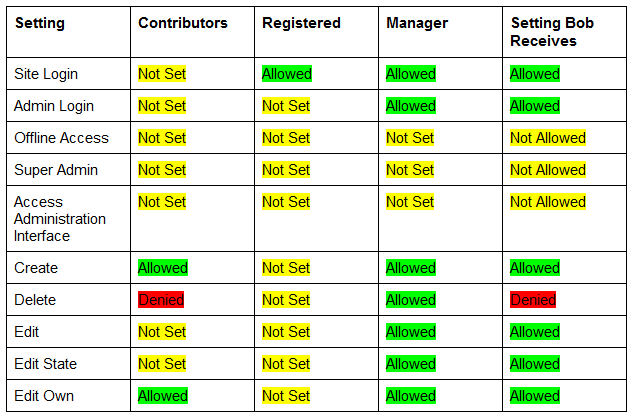
permmulti1

Viewing Permissions assigned to individual Users

As you can see, figuring out which Permissions have been given to an individual User that is in multiple Groups can become difficult rather quickly. To make things a bit easier, Joomla! includes a built-in tool to view all of the Permissions that have been assigned to an individual User. To turn this feature on, go to Global Configuration are from the control panel in the Administration area (the back end) of your site.
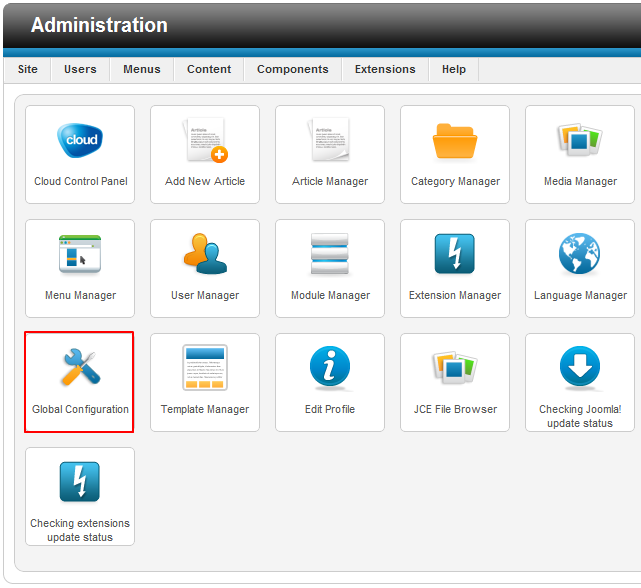
permmulti2

Go to the System tab, and enable the Debug System option by clicking on "Yes". Be sure to save your work when you re done.
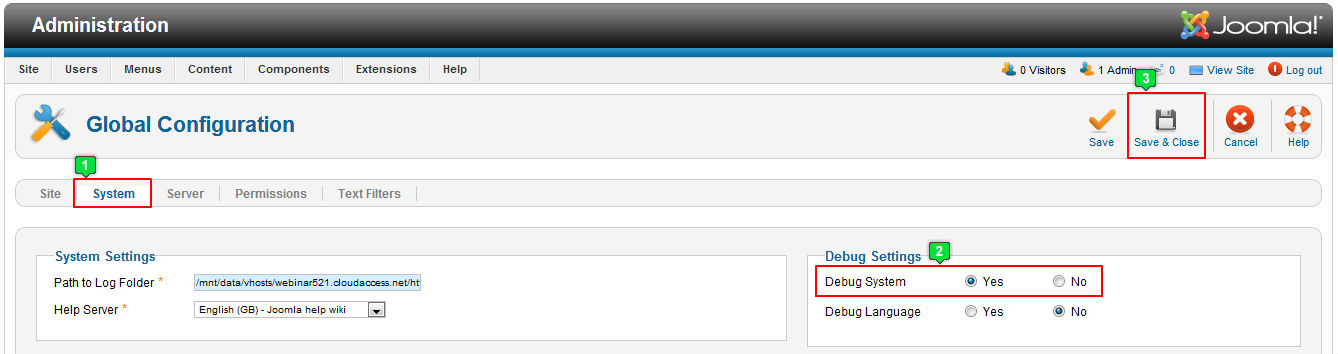
permmulti3

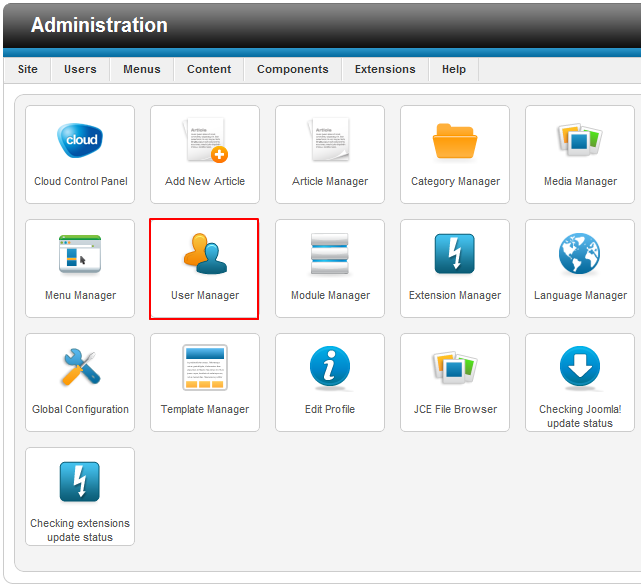
Next, go to the User Manager.

permmulti4

Once inside the User Manager, you ll notice a Debug Permissions Report button next to each Username.
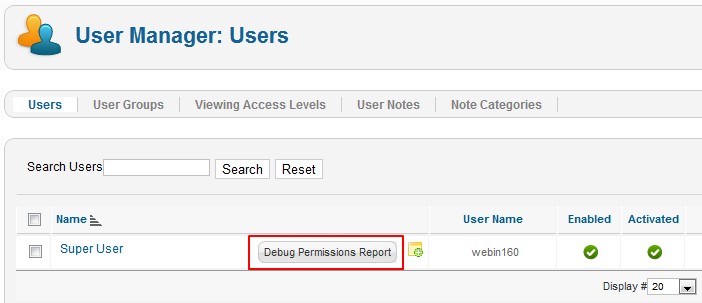
permmulti5

You will also see this button next to each Group in the Group Manager.
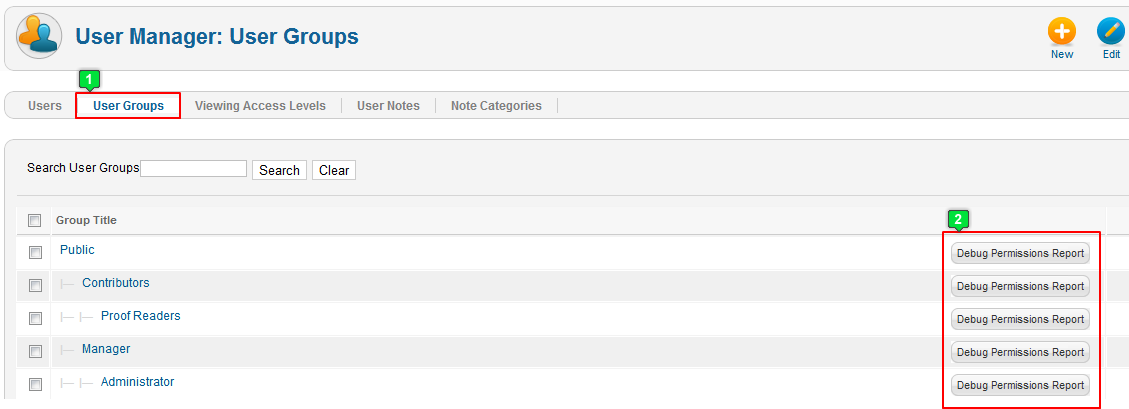
permmulti6


The Debug Permissions Report will show you which Permissions that User or Group has for each area of your site including Articles, Categories, Contacts, Menus and Menu Items, Modules, and Components.
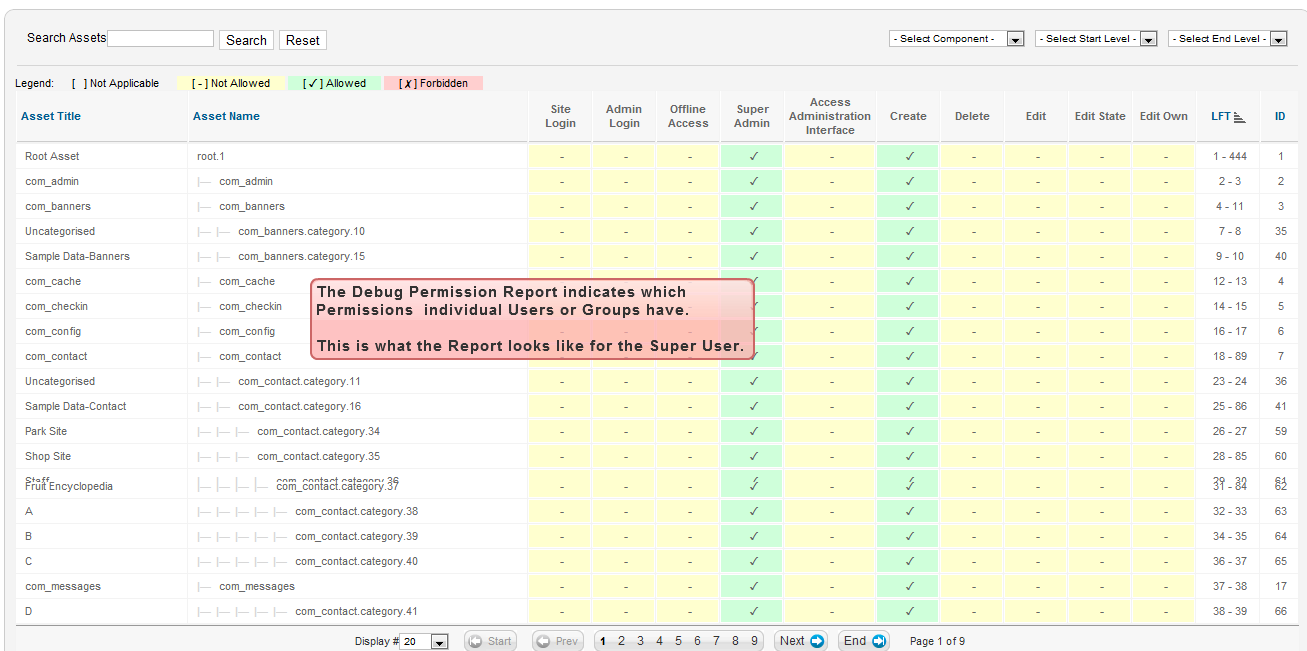
permmulti7


Free Trial Web Deploy 3.5 Hosting :: ASPHostPortal.com Proudly Launches Web Deploy 3.5 Hosting

clock November 1, 2013 10:50 by author Mike

Professional web hosting provider – ASPHostPortal.com proudly announced the integration of the latest Web Deploy 3.5 in all  web hosting plans. We are the first few hosting company that provide ASP.NET hosting plan that support the brand new Web  Deploy 3.5 Hosting.


WebDeploy v3.5 is now available and there are a few features to consider in this minor release:

  1. Load Balancer Support with Session Affinity. 
  2. Encrypting web.config Settings Post-Publish.
  3. App Offline Template.
  4. Seamless integration with IIS Manager (IIS7 and above), Visual Studio (2010 and above) for creating packages and  deploying them onto a machine, both locally and remotely.
  5. Integration with WebMatrix for deploying and downloading web applications.
  6. Seamless integration with the Web Platform Installer to install community web applications simply and easily.
  7. Web application packaging and deployment.
  8. Web server migration and synchronization.
  9. Automatic backup of Web Sites before making any changes.
  10. In addition to the IIS Manager, Visual Studio 10, Web Matrix tasks can be performed using the command-line, PowerShell  Cmdlets or public APIs.

According to ASPHostPortal.com, it's Web Deploy 3.5 offerings are distinguished by their low cost, with many of the hosting  services supporting the technology being of the more expensive variety.
For more information about this topics or have any enquiries related to Web Deploy 3.5 hosting, please visit  http://www.asphostportal.com

About ASPHostPortal.com:
ASPHostPortal.com is a hosting company that best support in Windows and ASP.NET-based hosting. Services include shared  hosting, reseller hosting, and sharepoint hosting, with specialty in ASP.NET, SQL Server, and architecting highly scalable  solutions. As a leading small to mid-sized business web hosting provider, ASPHostPortal strive to offer the most  technologically advanced hosting solutions available to all customers across the world. Security, reliability, and  performance are at the core of hosting operations to ensure each site and/or application hosted is highly secured and  performs at optimum level.


Joomla Hosting :: Joomla Redirecting Multiple URLs - Home Page with .htaccess

clock October 21, 2013 08:47 by author Mike

If you've changed menu items or aliases on your website, the old links will still be indexed on Google until it gets back around to checking them again. This means that if someone is linked to your website in Google and it gives them an old link, they will get a 404 error and won't be able to view anything.

This is where redirecting comes in. We need to redirect all the old links to the new ones to ensure a viewer still gets to the correct page. This can be done individually but can take hours - this is where we can utilise a batch redirect to speed up our process. This basically enables you to take any links with a certain alias and point it to a new alias.

Here is what a default Joomla htaccess file looks like:

##
# @package		Joomla
# @copyright	Copyright (C) 2005 - 2013 Open Source Matters. All rights reserved.
# @license		GNU General Public License version 2 or later; see LICENSE.txt
##

##
# READ THIS COMPLETELY IF YOU CHOOSE TO USE THIS FILE!
#
# The line just below this section: 'Options +FollowSymLinks' may cause problems
# with some server configurations.  It is required for use of mod_rewrite, but may already
# be set by your server administrator in a way that dissallows changing it in
# your .htaccess file.  If using it causes your server to error out, comment it out (add # to
# beginning of line), reload your site in your browser and test your sef url's.  If they work,
# it has been set by your server administrator and you do not need it set here.
##

## Can be commented out if causes errors, see notes above.
Options +FollowSymLinks

## Mod_rewrite in use.

RewriteEngine On

## Begin - Rewrite rules to block out some common exploits.
# If you experience problems on your site block out the operations listed below
# This attempts to block the most common type of exploit `attempts` to Joomla!
#
# Block out any script trying to base64_encode data within the URL.
RewriteCond %{QUERY_STRING} base64_encode[^(]*\([^)]*\) [OR]
# Block out any script that includes a <script> tag in URL.
RewriteCond %{QUERY_STRING} (<|%3C)([^s]*s)+cript.*(>|%3E) [NC,OR]
# Block out any script trying to set a PHP GLOBALS variable via URL.
RewriteCond %{QUERY_STRING} GLOBALS(=|\[|\%[0-9A-Z]{0,2}) [OR]
# Block out any script trying to modify a _REQUEST variable via URL.
RewriteCond %{QUERY_STRING} _REQUEST(=|\[|\%[0-9A-Z]{0,2})
# Return 403 Forbidden header and show the content of the root homepage
RewriteRule .* index.php [F]
#
## End - Rewrite rules to block out some common exploits.

## Begin - Custom redirects
#
# If you need to redirect some pages, or set a canonical non-www to
# www redirect (or vice versa), place that code here. Ensure those
# redirects use the correct RewriteRule syntax and the [R=301,L] flags.
#
## End - Custom redirects

##
# Uncomment following line if your webserver's URL
# is not directly related to physical file paths.
# Update Your Joomla! Directory (just / for root).
##

# RewriteBase /

## Begin - Joomla! core SEF Section.
#
RewriteRule .* - [E=HTTP_AUTHORIZATION:%{HTTP:Authorization}]
#
# If the requested path and file is not /index.php and the request
# has not already been internally rewritten to the index.php script
RewriteCond %{REQUEST_URI} !^/index\.php
# and the request is for something within the component folder,
# or for the site root, or for an extensionless URL, or the
# requested URL ends with one of the listed extensions
RewriteCond %{REQUEST_URI} /component/|(/[^.]*|\.(php|html?|feed|pdf|vcf|raw))$ [NC]
# and the requested path and file doesn't directly match a physical file
RewriteCond %{REQUEST_FILENAME} !-f
# and the requested path and file doesn't directly match a physical folder
RewriteCond %{REQUEST_FILENAME} !-d
# internally rewrite the request to the index.php script
RewriteRule .* index.php [L]
#
## End - Joomla! core SEF Section.

To add our redirects, we must ensure we put them before the Joomla SEF rewrites which is generally the last part of the file. See below how you can rewrite a URL.

######PTP SEO Redirections -- BEGIN
#301 Redirect Entire Old directories
RewriteRule blog/blog-category-1(.*)$ blog/blog-category-2$1 [R,L]
######PTP SEO Redirections -- END

This basically tells anything that has blog/blog-category-1 in it to redirect to the URL blog/blog-category-2. so the url withblog/blog-category-1/sub-category/item-to-view will automatically update toblog/blog-category-2/sub-category/item-to-view

Below is where we need to add this into our htaccess file - just before the SEF rewrites.

######PTP SEO Redirections -- BEGIN
#301 Redirect Entire Old directories
RewriteRule blog/blog-category-1(.*)$ blog/blog-category-2$1 [R,L]
######PTP SEO Redirections -- END

# RewriteBase /

## Begin - Joomla! core SEF Section.
#
RewriteRule .* - [E=HTTP_AUTHORIZATION:%{HTTP:Authorization}]
#
# If the requested path and file is not /index.php and the request
# has not already been internally rewritten to the index.php script
RewriteCond %{REQUEST_URI} !^/index\.php
# and the request is for something within the component folder,
# or for the site root, or for an extensionless URL, or the
# requested URL ends with one of the listed extensions
RewriteCond %{REQUEST_URI} /component/|(/[^.]*|\.(php|html?|feed|pdf|vcf|raw))$ [NC]
# and the requested path and file doesn't directly match a physical file
RewriteCond %{REQUEST_FILENAME} !-f
# and the requested path and file doesn't directly match a physical folder
RewriteCond %{REQUEST_FILENAME} !-d
# internally rewrite the request to the index.php script
RewriteRule .* index.php [L]
#
## End - Joomla! core SEF Section.


About ASPHostPortal.com

We’re a company that works differently to most. Value is what we output and help our customers achieve, not how much money we put in the bank. It’s not because we are altruistic. It’s based on an even simpler principle. "Do good things, and good things will come to you".

Success for us is something that is continually experienced, not something that is reached. For us it is all about the experience – more than the journey. Life is a continual experience. We see the Internet as being an incredible amplifier to the experience of life for all of us. It can help humanity come together to explode in knowledge exploration and discussion. It is continual enlightenment of new ideas, experiences, and passions

 photo ahp banner aspnet-01_zps87l92lcl.png

Corporate Address (Location)

ASPHostPortal
170 W 56th Street, Suite 121
New York, NY 10019
United States

Sign in